Fruit Nutrition
Fruit Sugar Explained: Should You Worry About Fructose?
A clear look at natural sugars in fruit, how fiber changes their effect, and which fruits are lower in sugar.
Claire Moreau · September 2, 2026 · 7 min read
Fruit Nutrition
Blueberries, raspberries, strawberries and blackberries compared: fiber, vitamin C, polyphenols, and how to eat more of them on a budget.
By Claire Moreau, Registered Dietitian & Senior Food Researcher · Updated October 8, 2026 · 9 min read · Fact-checked
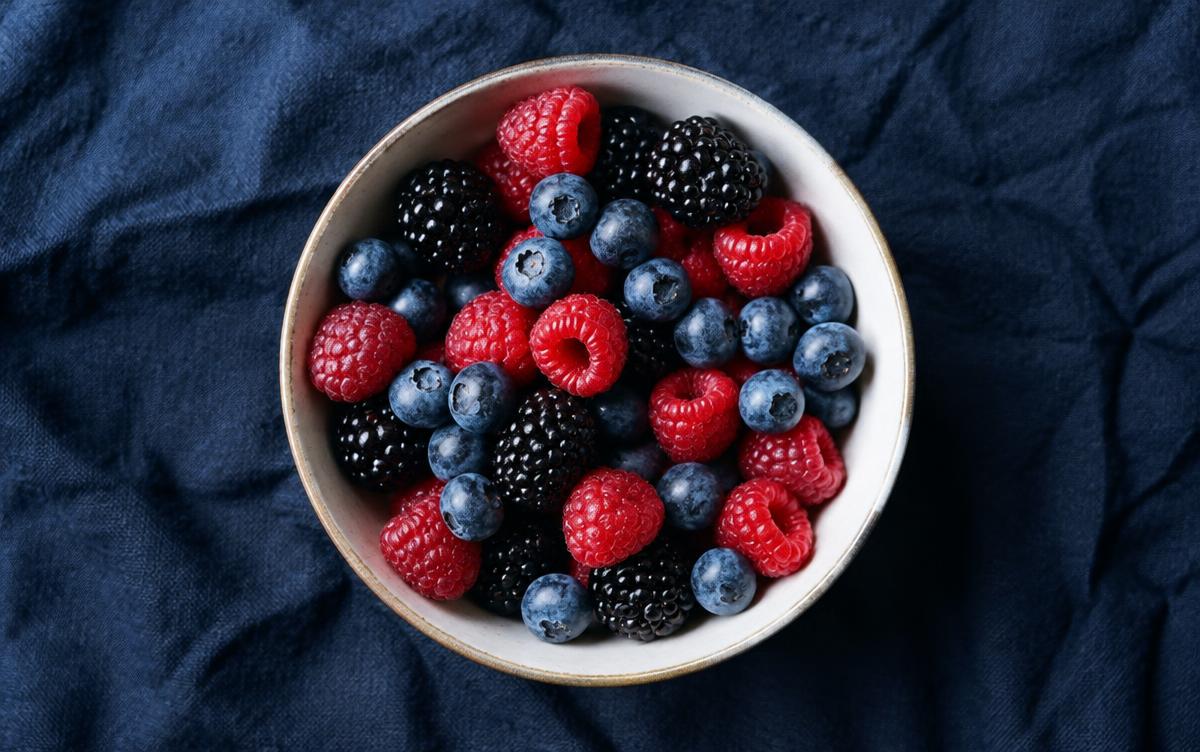
Berries are often called superfoods, a label that tends to promise more than any single food can deliver. Still, among everyday fruits, berries do stand out. They are low in sugar for their size, high in fiber, rich in vitamin C, and packed with the pigments that give them their deep red, blue and purple colors. This guide looks at what those nutrients do, what studies have and have not found, and how to fit more berries into normal meals without spending a fortune.
Most fruits are a combination of water, natural sugars, fiber and a modest amount of vitamins. Berries follow the same pattern but tilt it in a useful direction. Because they are made up of many tiny seeds and thin skins, they carry an unusually high proportion of fiber relative to their sugar. A cup of raspberries provides around 8 grams of fiber — more than a slice of most wholegrain breads — with roughly 5 grams of sugar.
Berries are also among the richest common sources of anthocyanins, a family of plant pigments in the polyphenol group. These compounds are what stain your fingers when you pick blackberries, and they are the main reason berries attract so much research attention.
Each berry has its own strengths. Per typical 1-cup (around 150 g) serving, approximate values look like this:
Large observational studies that follow people over many years have linked regular berry intake with lower rates of heart disease and type 2 diabetes. In the Nurses' Health Study, for example, women who ate the most strawberries and blueberries had a lower risk of heart attack than those who rarely ate them. Shorter controlled trials have shown modest improvements in blood pressure, blood vessel function and markers of inflammation after several weeks of daily berry consumption.
Some research has also explored berries and brain health. Small trials in older adults have reported slight improvements on memory tests after blueberry supplementation, but the studies are short and the effects small. It is fair to say the findings are encouraging rather than conclusive.
It is important to keep this evidence in perspective. People who eat a lot of berries often eat more fruit and vegetables overall, exercise more, and smoke less. Researchers try to account for these factors, but observational studies cannot prove that berries alone cause the benefit. The most honest summary is that berries are an excellent part of a varied diet, not a cure for anything on their own.
Frozen berries are picked and frozen at peak ripeness, and freezing preserves most of their fiber and polyphenols. They are usually cheaper than fresh berries out of season and are ideal for porridge, smoothies, baking and sauces. Their texture softens on thawing, so they are less suited to eating whole as a snack.
Dried berries are convenient but concentrate the sugar, and many dried cranberries and blueberries have added sugar or oil. Check the label and treat a small handful — about 30 grams — as one portion.
Jams and berry-flavored products typically contain far more added sugar than fruit and should not be counted as a fruit serving.
Berries are delicate and spoil quickly, so a little care goes a long way:
You do not need special recipes to benefit. Stir a handful of frozen berries into oats while they cook, scatter fresh berries over yogurt, or blend them into a smoothie with a banana and milk. A simple berry compote — frozen berries warmed in a pan for five minutes — works on pancakes, toast or plain yogurt and keeps for several days in the fridge.
If cost is a concern, buy fresh berries only in their local summer season and rely on frozen mixed berries the rest of the year. Supermarket own-brand frozen berries are nutritionally comparable to premium brands.
Berries are safe for nearly everyone. People taking warfarin should keep their intake of vitamin K–rich foods, such as blackberries, roughly consistent rather than avoiding them, and discuss changes with their doctor. Cranberry products may interact with certain medications, and anyone with a history of kidney stones may be advised to moderate very high intakes of some berries. Small children should have firm berries like whole blueberries cut in half to reduce choking risk.
There is no single winner. Raspberries and blackberries lead on fiber, strawberries on vitamin C, and blueberries on anthocyanins. Eating a mix gives you the widest range of benefits.
Yes. Frozen berries retain most of their nutrients and are often more affordable, especially out of season.
A handful or about 80 g counts as one fruit portion. Many studies showing benefits involved roughly one serving a day or several servings a week.
No. Wash them just before eating, because moisture during storage encourages mold.
This article is for general information only and isn't a substitute for professional medical advice. See our disclaimer.
Fruit Nutrition
A clear look at natural sugars in fruit, how fiber changes their effect, and which fruits are lower in sugar.
Claire Moreau · September 2, 2026 · 7 min read
Storage & Ripening
Learn how to freeze berries, bananas, mangoes, stone fruit and more without clumps or freezer burn — plus how long frozen fruit keeps.
Claire Moreau · October 5, 2026 · 9 min read